
Laško
Aškerc Square
STORY OF THE LOCATION
Aškerčev trg
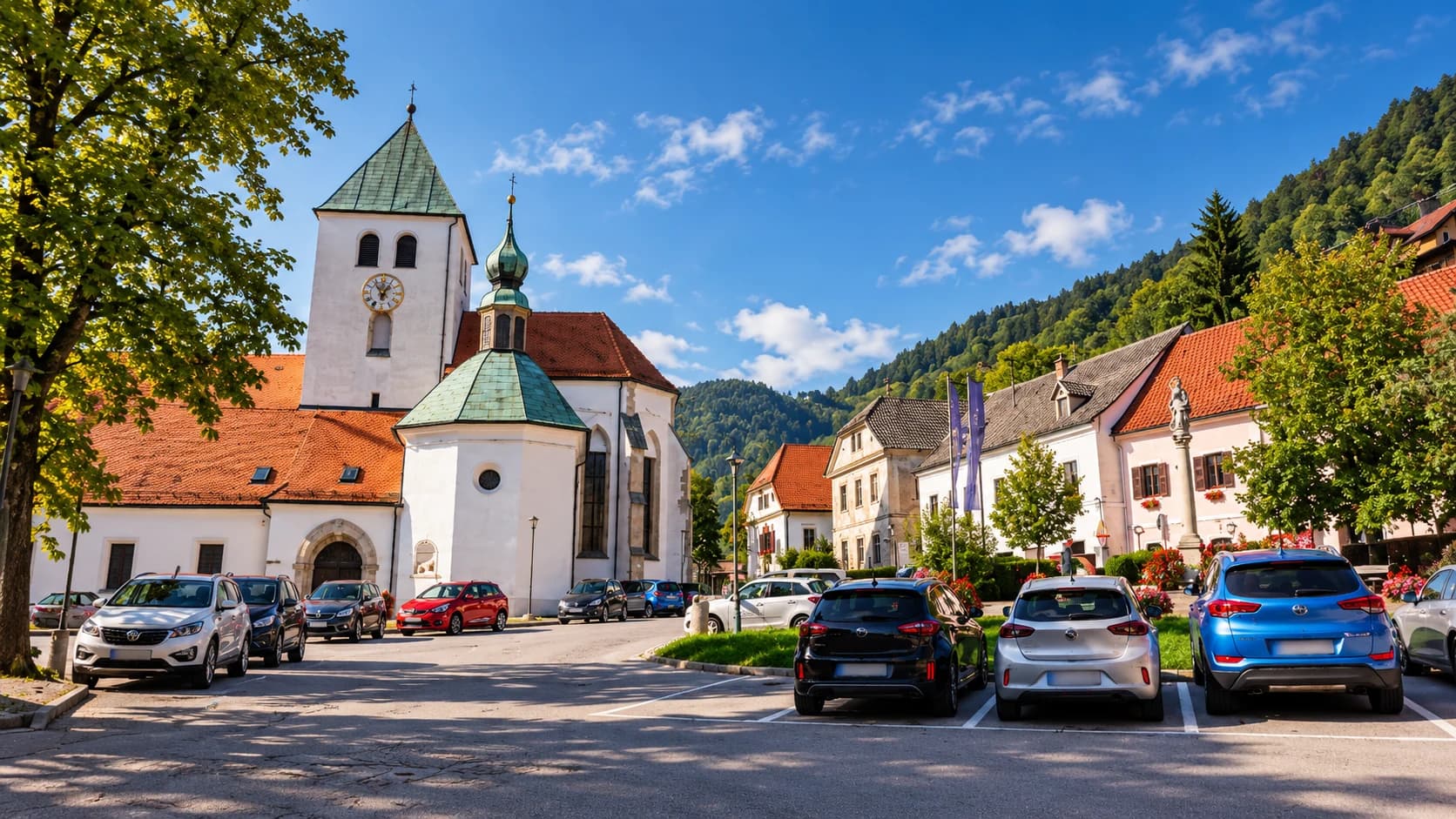
Aškerčev trg, named after the poet Anton Aškerc, is the heart of our town. The funnel-shaped square developed at the foot of the castle hill as early as the 12th or 13th century, and it acquired its present appearance after the great fire of 1840. The central part is marked by the mighty Church of St Martin with the rectory and chaplaincy, while in the middle of the square stands a Mary shrine, which originally stood by the church in Marija Gradec. The square is surrounded by a row of old burgher houses, each telling a story from Laško's past. Today, the stories of Laško also live on in the Laško Museum and the Laško Library, where the memory of the past intertwines with knowledge and the cultural pulse of the present. Once, during the time of great fairs, the loud bargaining of market women and buyers could be heard, but today the square is marked by the lively pulse of events.
Anton Aškerc was born on 9 January 1856 into a farming family in either Globoko or Senožete, near Rimske Toplice. He was a leading Slovenian epic poet, priest and archivist. After completing secondary school in Celje and studying theology in Maribor, he entered the priesthood. His freethinking, progressive views and disputes with church authorities led to frequent transfers. His clerical career ended with early retirement, and in 1898 he became Ljubljana’s first city archivist. During this period, he also edited the respected literary journal Ljubljanski zvon for several years. He died in Ljubljana on 10 June 1912 and is buried at the Navje Memorial Cemetery.
Aškerc entered literary history as a central figure of Slovenian realism and a master of ballads and romances. He established narrative, or epic, poetry in Slovenian literature, turning from love and sentiment to powerful historical themes, social injustice, patriotism and freedom of thought. His most important work, the 1890 collection Balade in romance (Ballads and Romances), is a high point of Slovenian epic poetry. Among his best-known works are Mejnik (The Boundary Stone), a fantastical ballad about a boundary dispute between farmers; Kronanje v Zagrebu (The Coronation in Zagreb), a historical ballad about the fate of Matija Gubec; the love poem Anka; and the narrative poem Zlatorog.
The Municipality of Laško designated 2026 the Year of Aškerc to mark the 170th anniversary of his birth. Throughout the year, numerous cultural, artistic, educational and tourism events across the Laško area celebrated his rich literary legacy.
DISCOVER THE SQUARE
Aškerčev trg
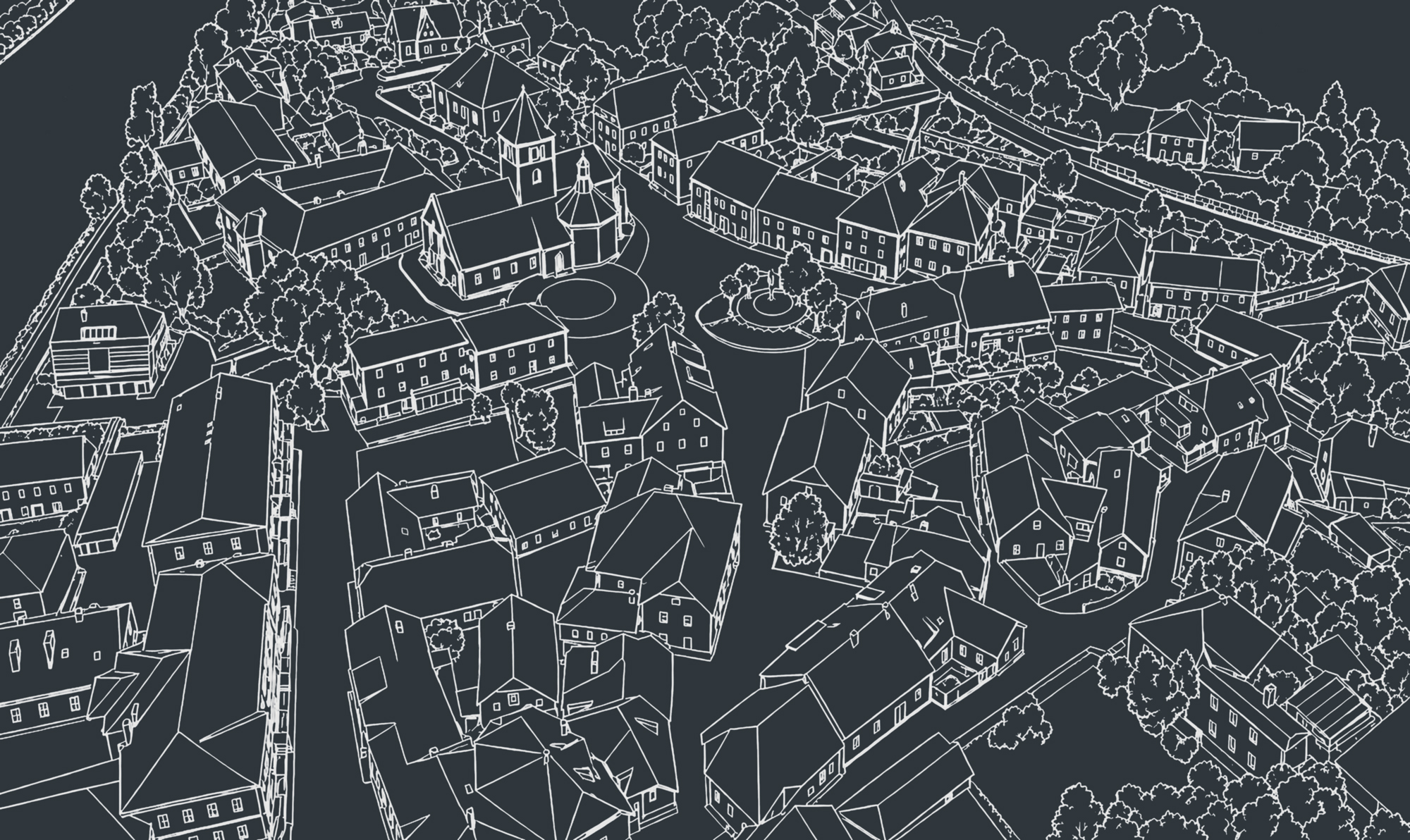
Select a white point on the drawing to open the story of the selected location. On a phone, swipe the drawing left or right to explore the details.
PHOTOGRAPHS
Gallery
Photo: Jaka Teršek, www.lasko.info; Photo: Rok Deželak RD2.si, www.lasko.info; Archive of the Facebook community Laško in Laščani nekoč